Developing Early Design Stages Tools for Windows Considering Sky Conditions, Solar Radiation and Shading Control
Luming Xiao and Liliana O. Beltrán · Texas A&M University
Independent research · Fall 2024–Fall 2025 · IBPSA Building Simulation 2025
When should a window admit more daylight, and when should it block direct sun? We developed two Rhino–Grasshopper tools to help architects and students answer those questions in the early stages of window design.
From local weather to a window
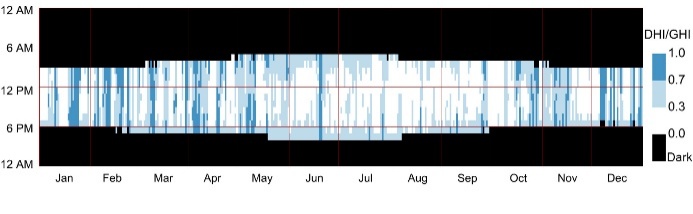
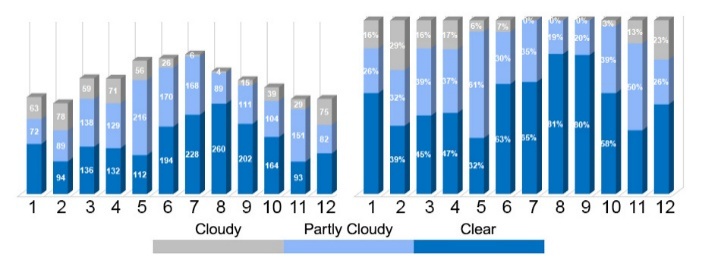
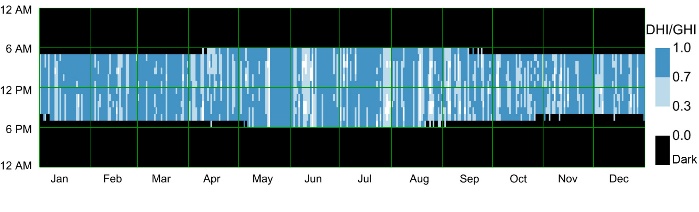
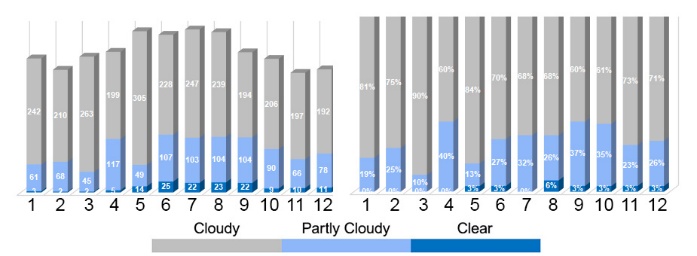
The Sky Type Calculator uses the ratio of diffuse to global horizontal irradiance in an EnergyPlus Weather (EPW) file to classify daylight hours as clear, partly cloudy, or cloudy. Seasonal patterns show designers when access to diffuse daylight matters most.
The calculator is now available as a web app. Try Sky Type Studio
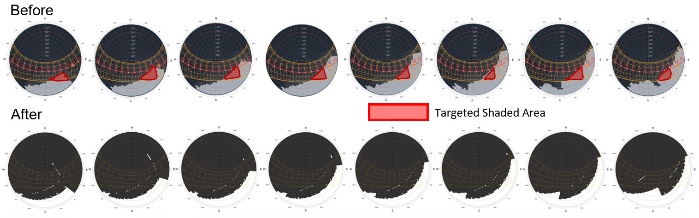
We digitized Olgyay’s shading mask method and combined it with Radiance simulations to create the 3D Iterative Shading Mask Protractor, which helps designers optimize shading for each window in real time.
Design applications
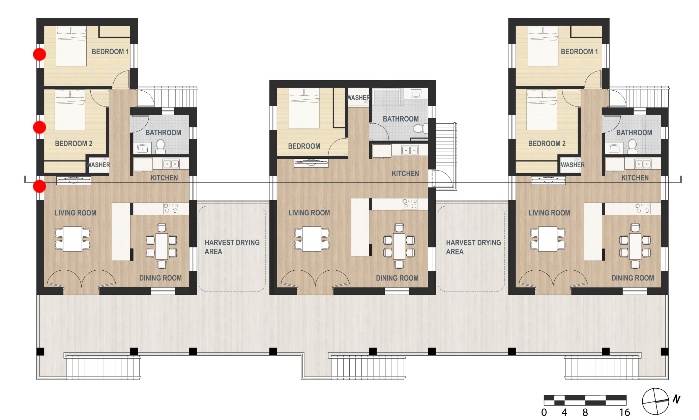
New housing in Cao Bang, Vietnam. The Sky Type Calculator classified most days at the site as cloudy. Under these skies, daylight is predominantly diffuse and more evenly distributed across the sky than on a clear day. The team used the shading mask to test how much exterior shading the windows marked on the plan needed. A compact 900 mm device met the design target at those windows, blocking direct sun for more than half of the overheating hours while keeping the openings available for daylight and ventilation.
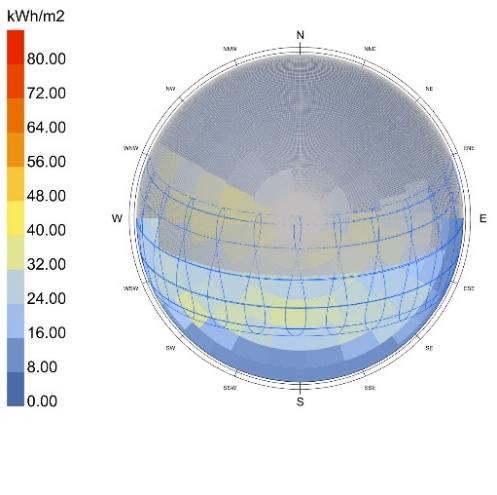
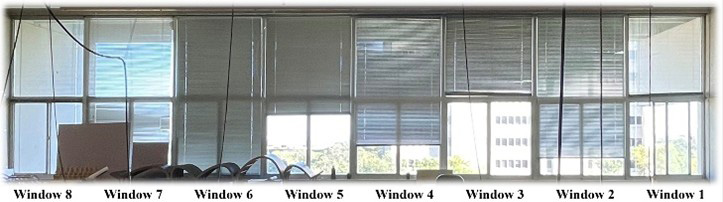
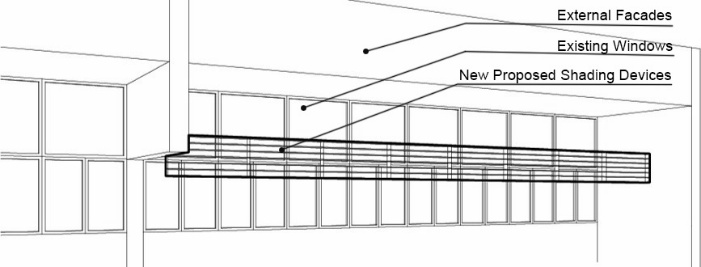
Educational building retrofit in Central Texas. Clear days were frequent at this site. Although the existing shades blocked direct sun for most of the day, low morning sun caused glare. Occupants often lowered the interior blinds early and left them closed, relying on electric lighting for the rest of the day. The team traced the morning sun path at each of eight windows and used the shading masks to size the proposed exterior shades. The aim was to block direct sun during those hours so occupants could leave the blinds open and use daylight throughout the day.