Assessing Melanopic Illuminance in Homes: From Design to Construction
L. O. Beltrán, L. M. Xiao, and R. T. Tumpa · Texas A&M University
Research Assistant · Fall 2024–Fall 2025 · CIE 2025, Vienna
How closely can a daylight model predict the light that reaches someone’s eyes as they sit at a desk? In a home office in College Station, Texas, we compared spectral simulations with measurements taken after construction. We used melanopic equivalent daylight illuminance (melanopic EDI), which weights light at the eye by the sensitivity of melanopsin.
From model to measurement
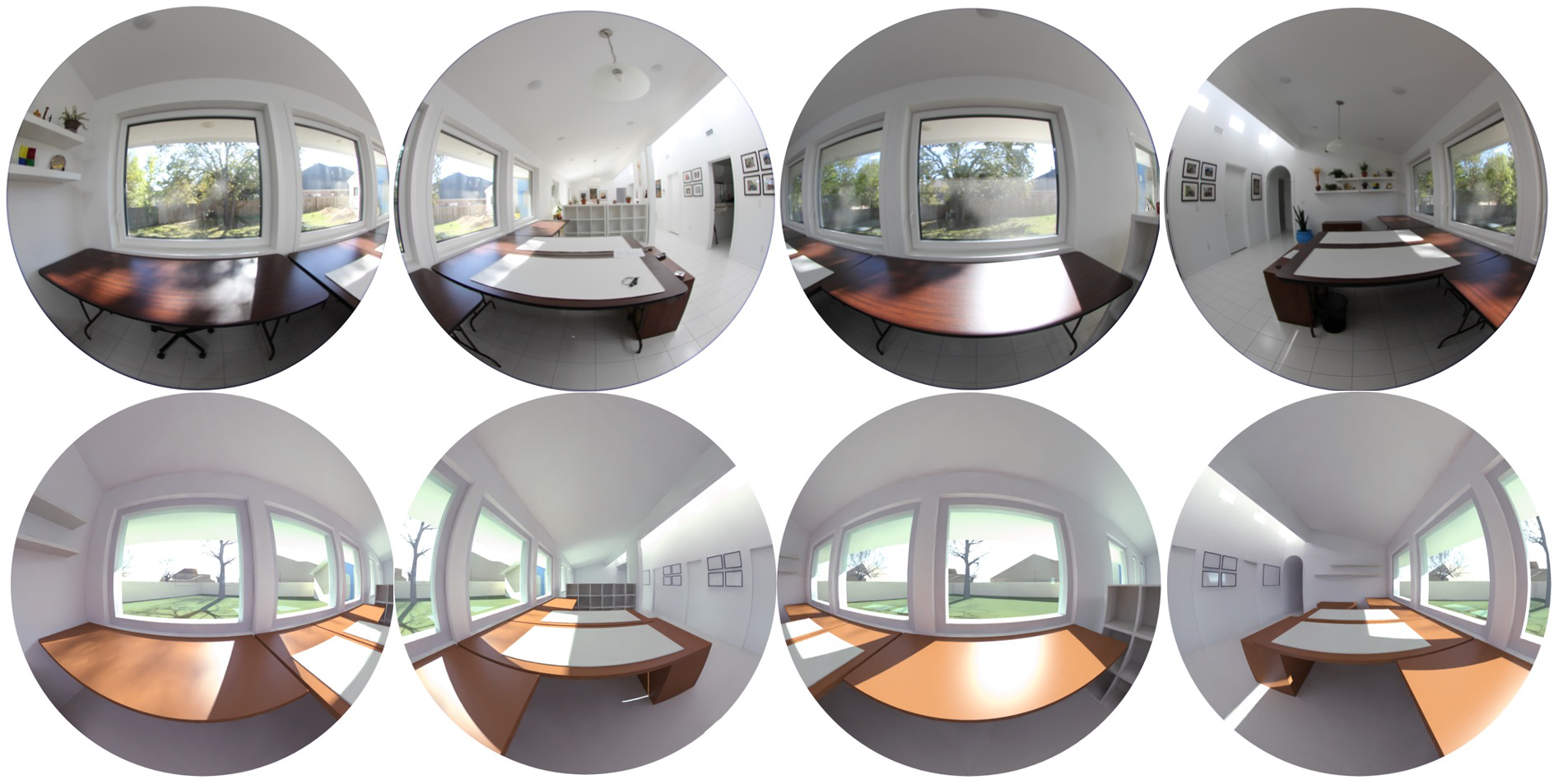
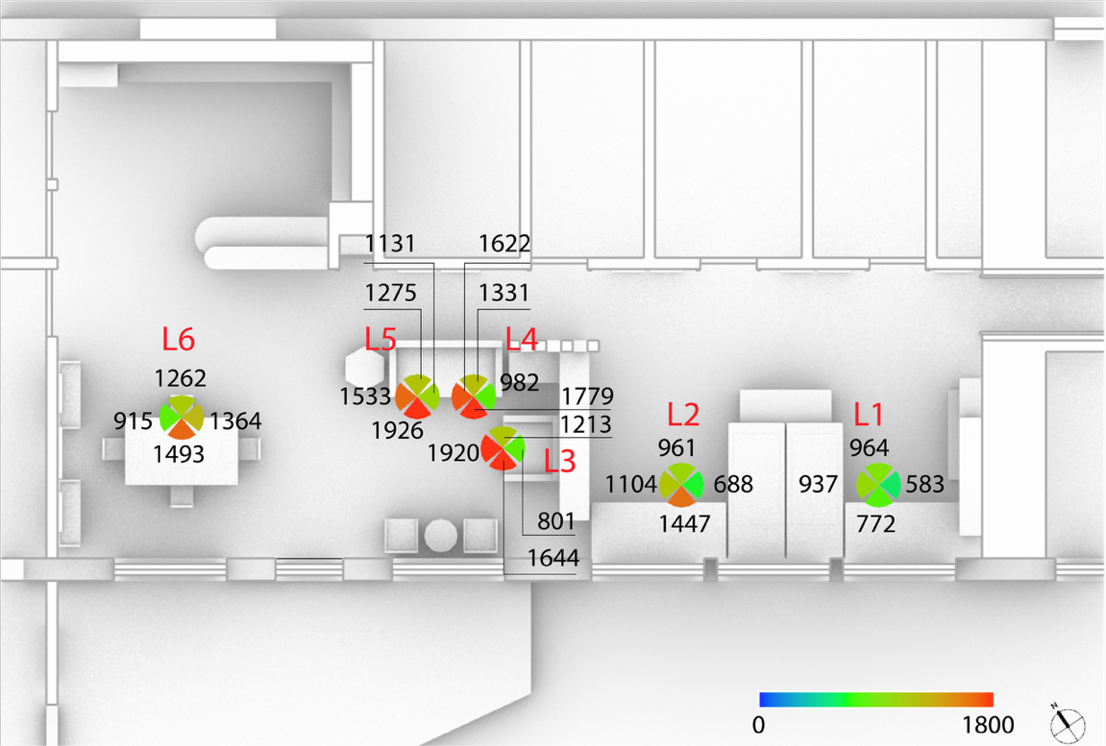
At two workstations, we measured the spectrum of daylight at seated eye height (1.2 m), facing north, east, south, and west. We used measured glazing transmittance and interior surface reflectances to model the finished space, then compared ALFA’s predictions with field readings for each view.
What we found
Evaluate melanopic EDI in the direction a seated person faces. At 1 p.m. on November 23, 2024, ALFA overestimated the south-facing reading at workstation L2 by about 4% (1,447 lx predicted, 1,396 lx measured). At the same desk and time, it underestimated the north-facing reading by about 25% (961 lx predicted, 1,276 lx measured).
The northward view received daylight from the clerestory windows and nearby reflective surfaces. These features help explain the high measured reading, although the study did not isolate the cause of ALFA’s northward underestimate. Facing south, we measured 659 lx at L1, where a mature oak blocked part of the sky, compared with 1,396 lx at L2.