Academic Projects

Khuoi Ky Houses

2023 · Cao Bang, Vietnam · Solar Decathlon Design Challenge

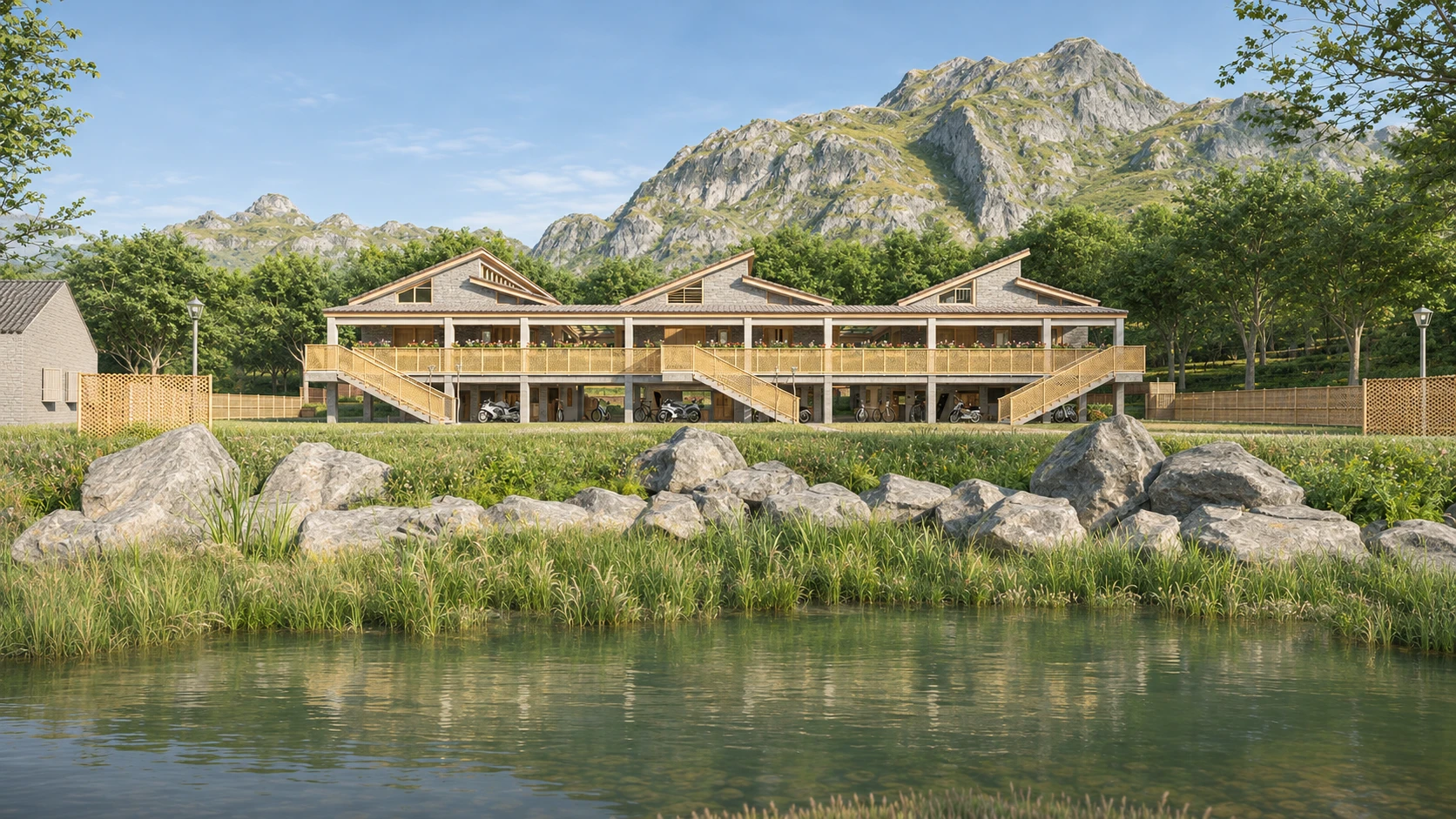
We began by studying wind, sunlight, and seasonal temperatures in Cao Bang’s humid subtropical climate. Drawing on a local Tày house, we linked three raised homes with a shaded veranda and spaced them so breezes could pass through openings on both sides of each home. Clerestory windows bring daylight deeper into the living rooms. We tested winter sun and morning light alongside summer shading to balance residents’ daylight needs with thermal comfort. With rooftop solar, our energy model projected net-zero annual energy use for all three homes.

My role
Student team lead
Award
Fourth place, Attached Housing Division · Team Spirit Award
Team
Texas A&M University and Hanoi University of Civil Engineering, advised by Dr. Liliana O. Beltrán
Texas A&M competition coverage

Three raised houses share a shaded veranda overlooking a stream at the foot of the mountains.
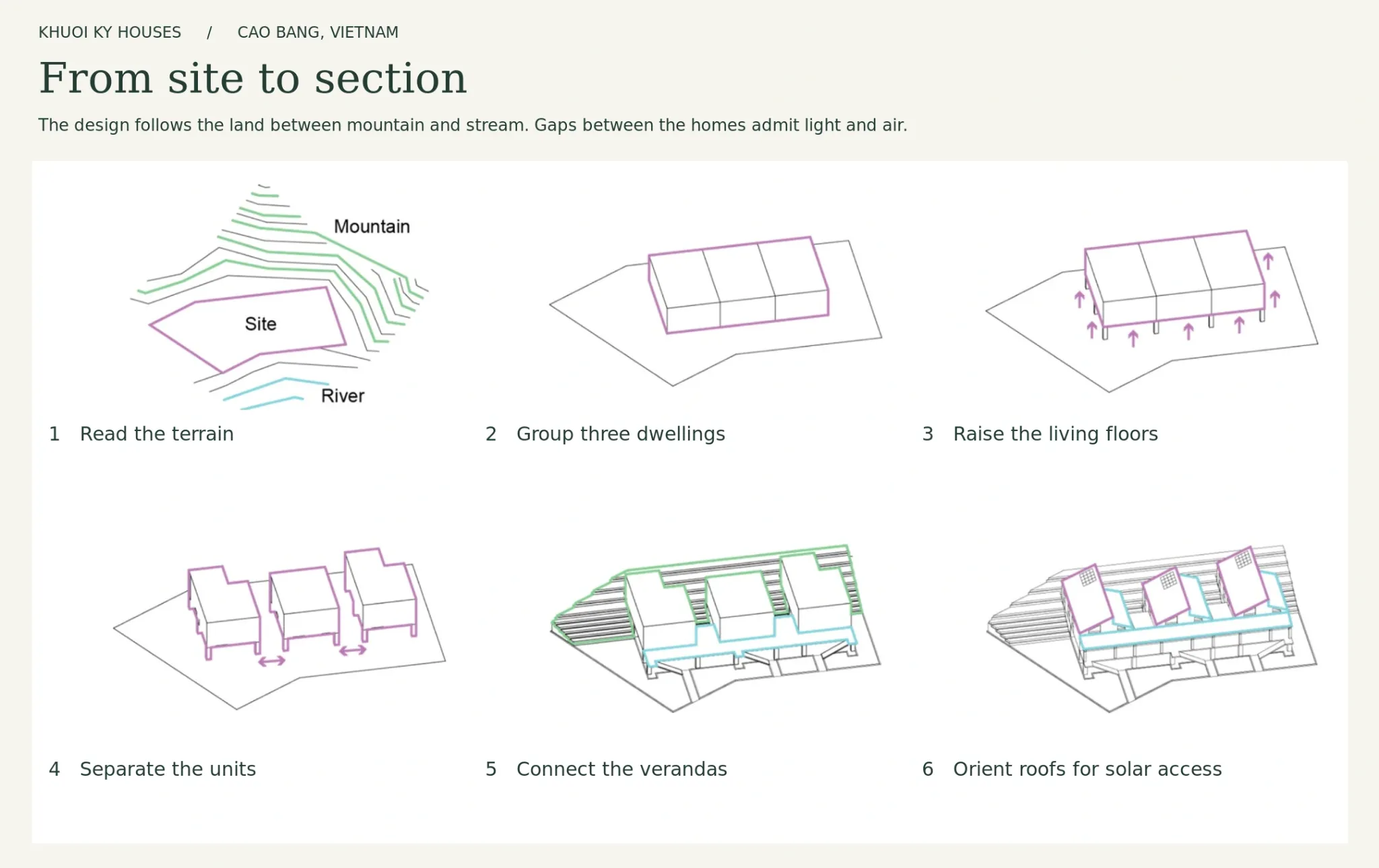
Six diagrams show how the terrain informed the floor levels, spacing, shared veranda, and roof orientation.
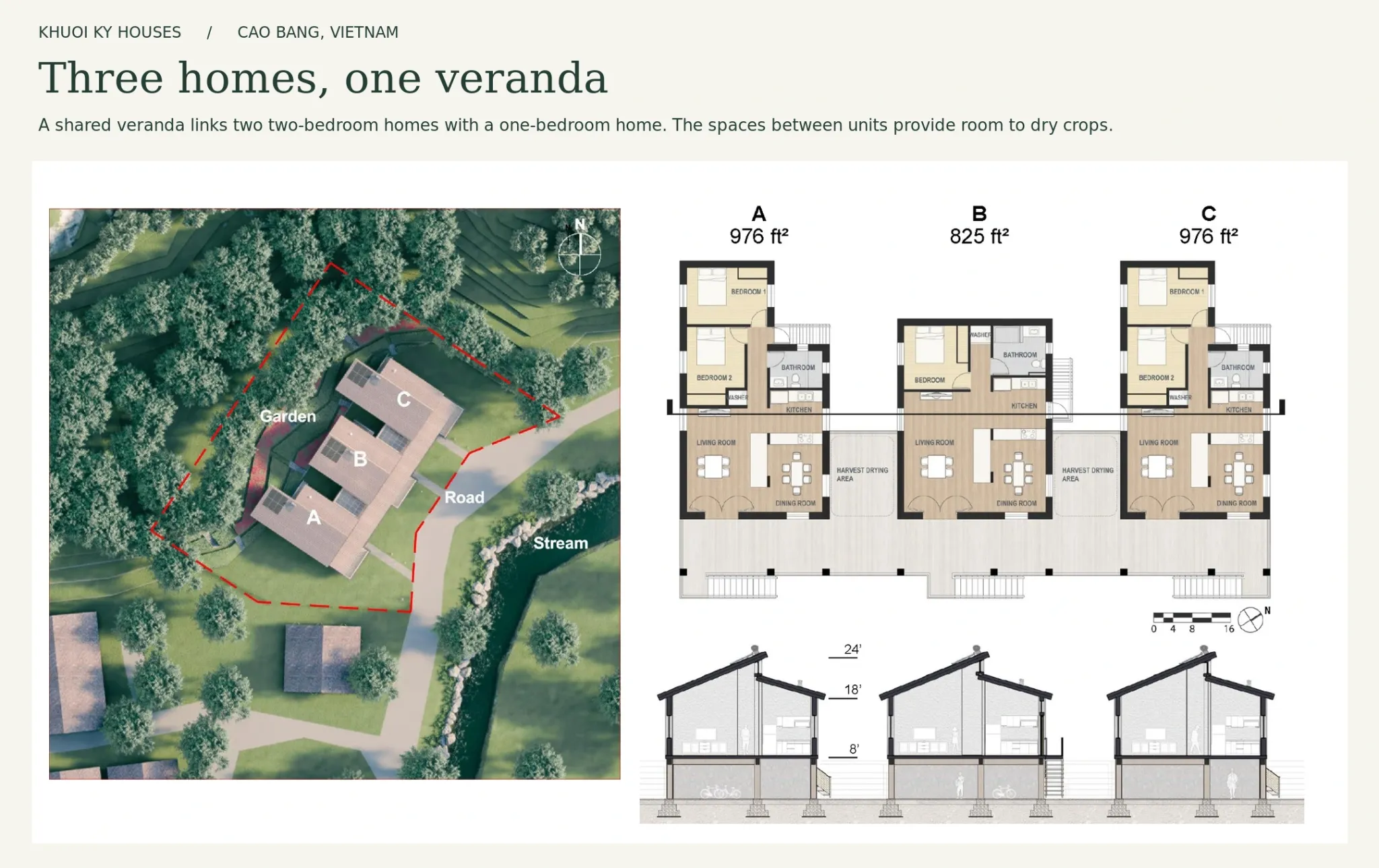
Site plan, floor plans, and sections show three homes connected by a veranda, with crop-drying areas between them.
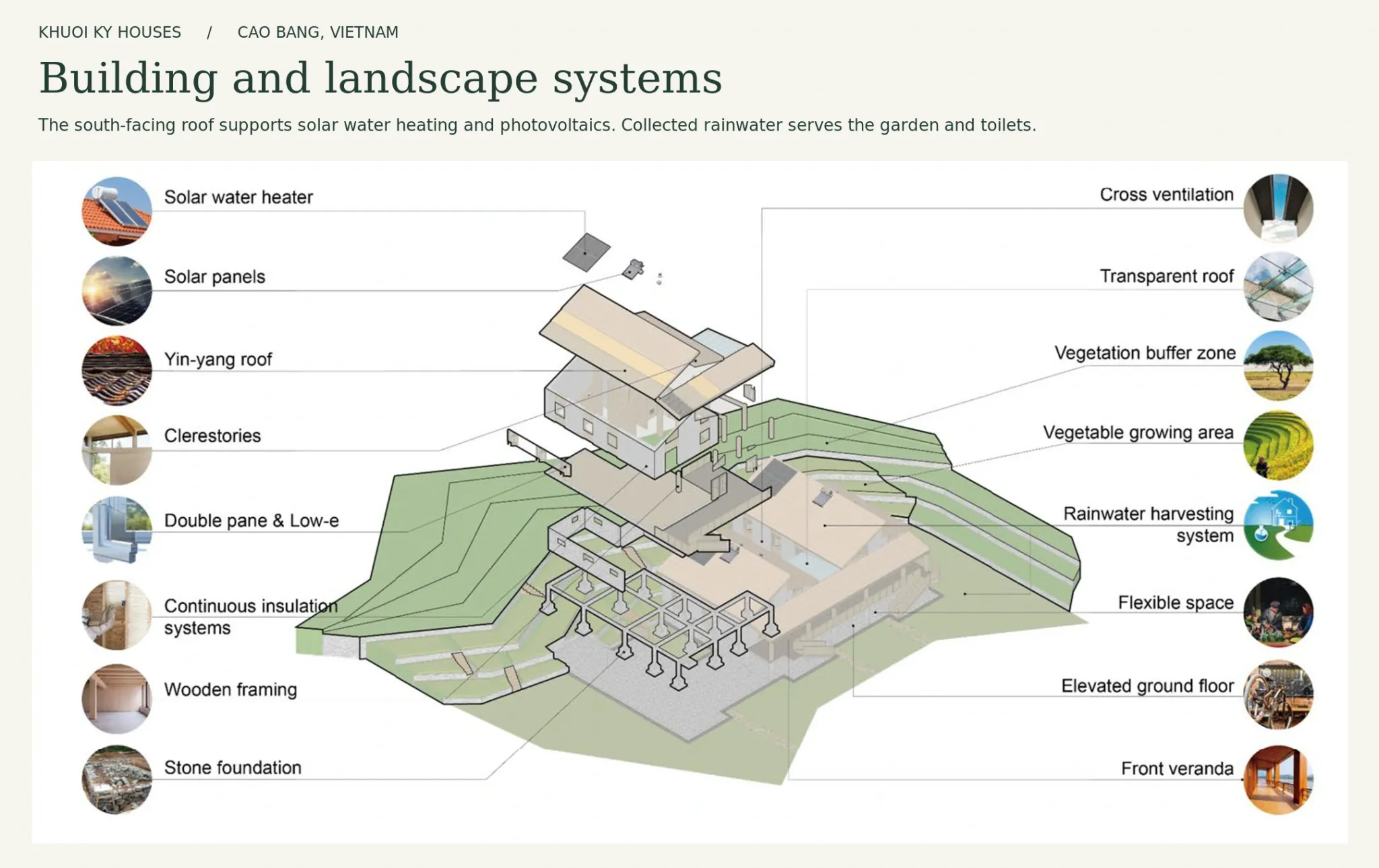
Exploded diagram locating clerestories, cross-ventilation openings, rooftop solar systems, and rainwater collection.
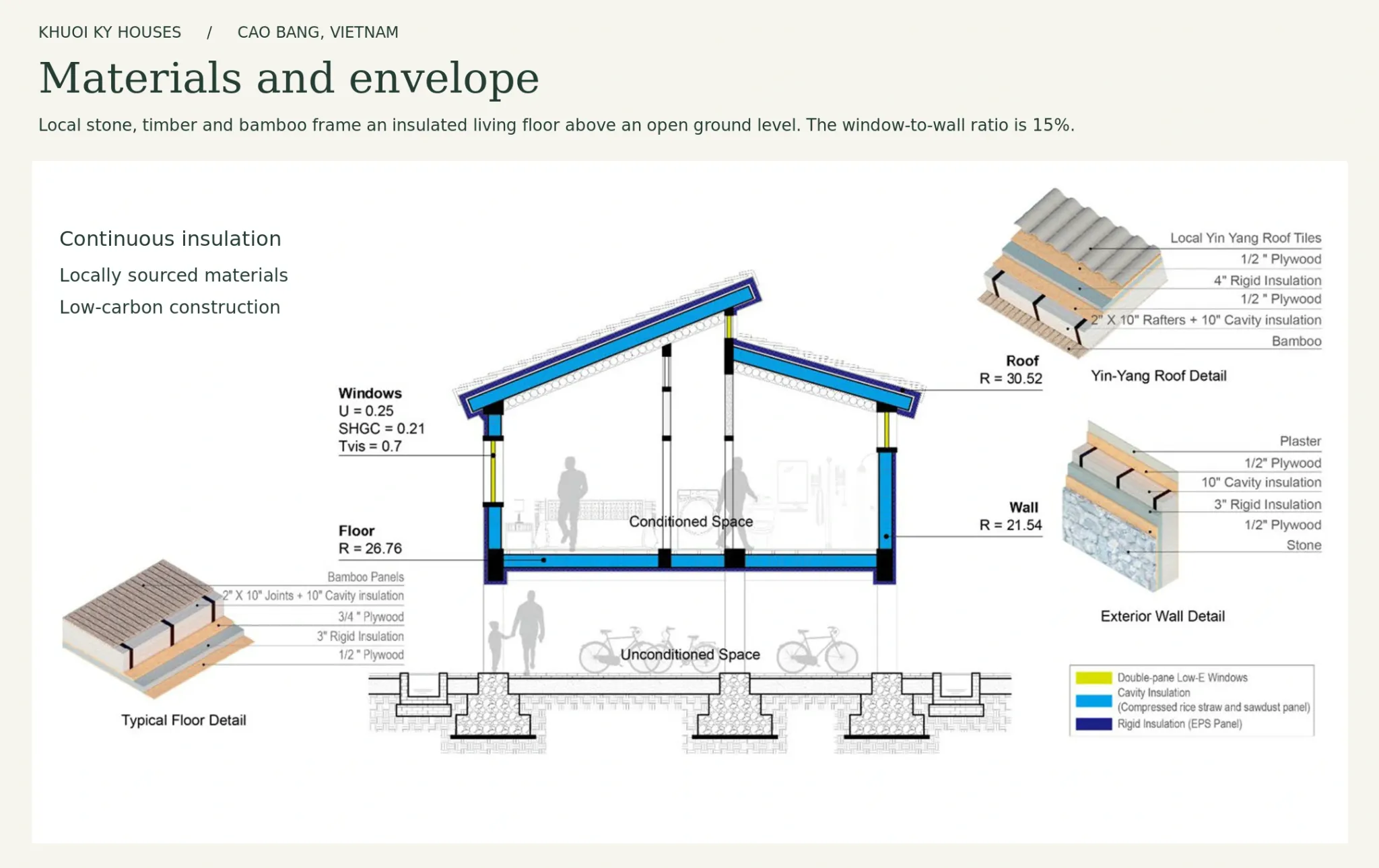
A section traces continuous insulation around the raised living spaces alongside roof, wall, and floor assembly details.
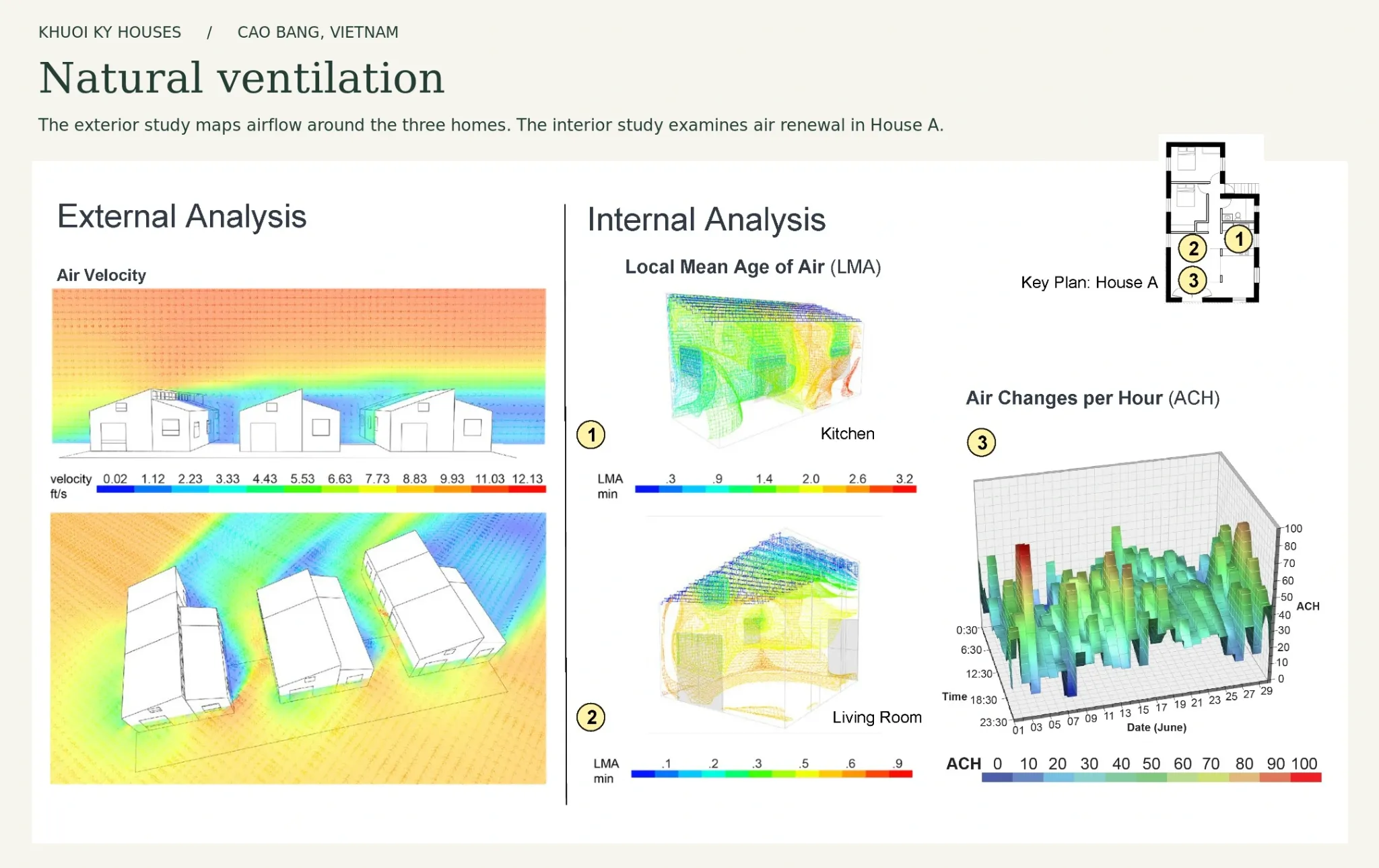
Airflow simulations around the three homes and plots of local mean age of air and air changes per hour in House A.
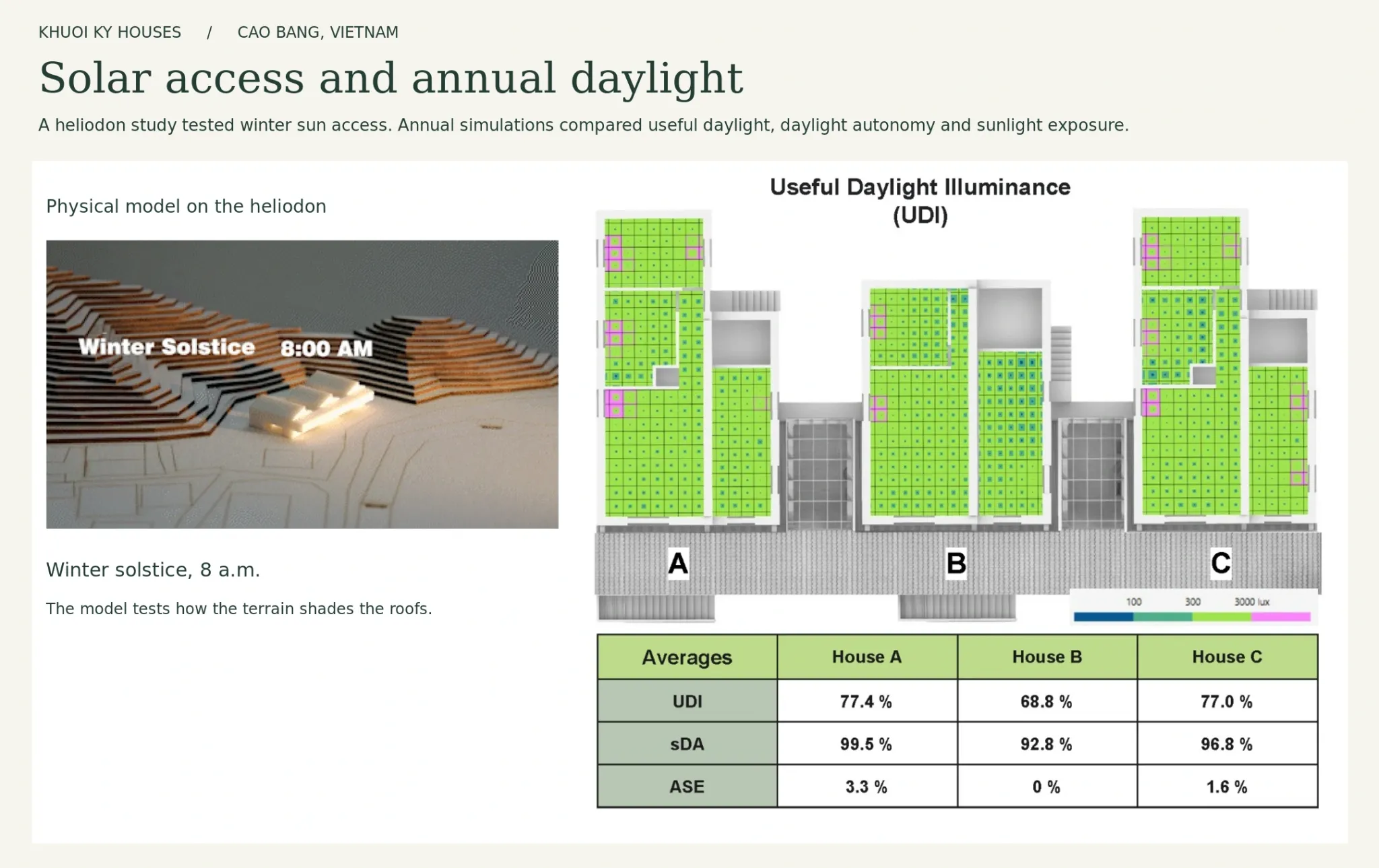
A winter-solstice heliodon test and annual daylight results for all three homes, including spatial daylight autonomy of 92.8 to 99.5 percent.
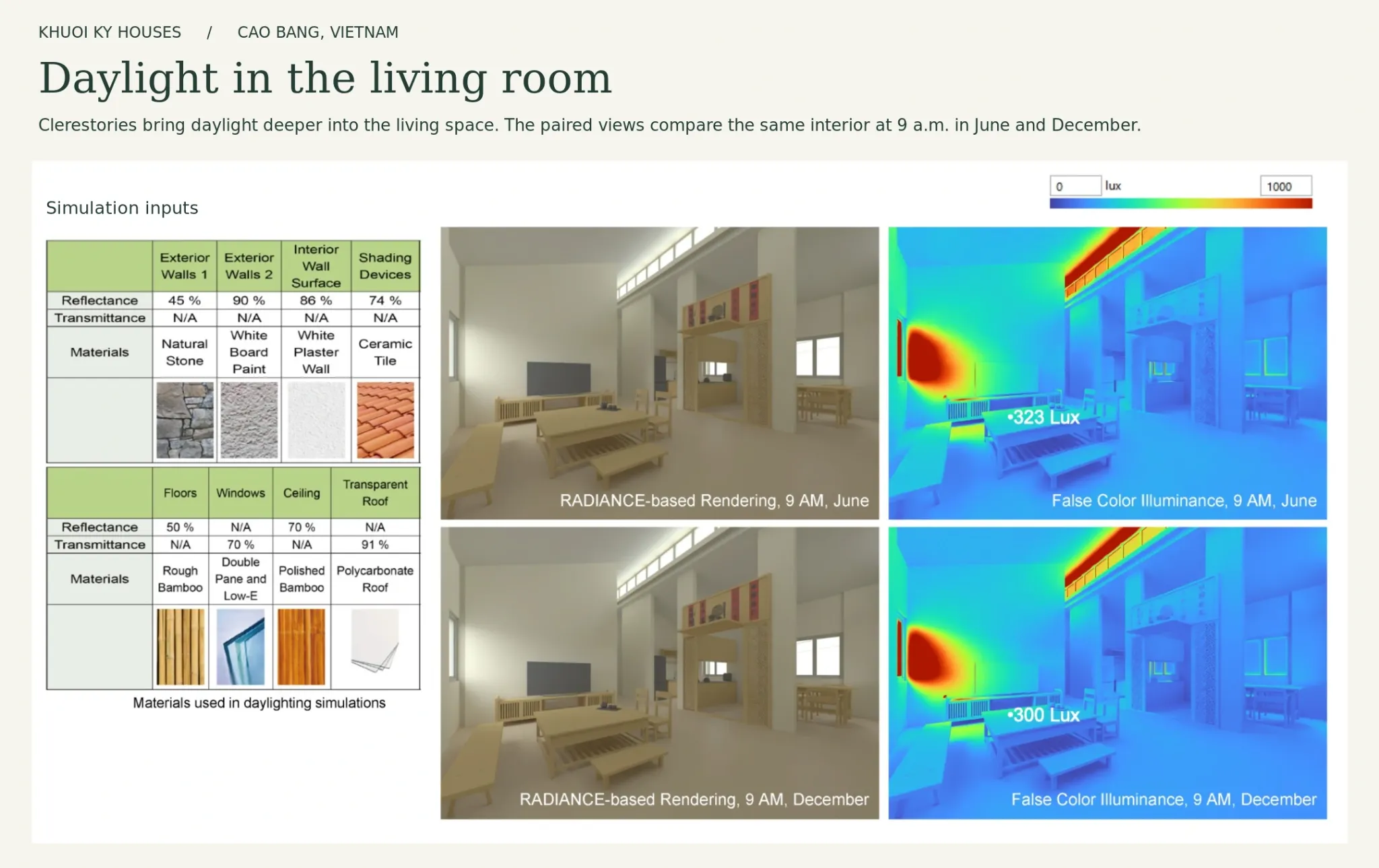
Radiance renderings and illuminance maps compare the same clerestory-lit living room at 9 a.m. in June and December.
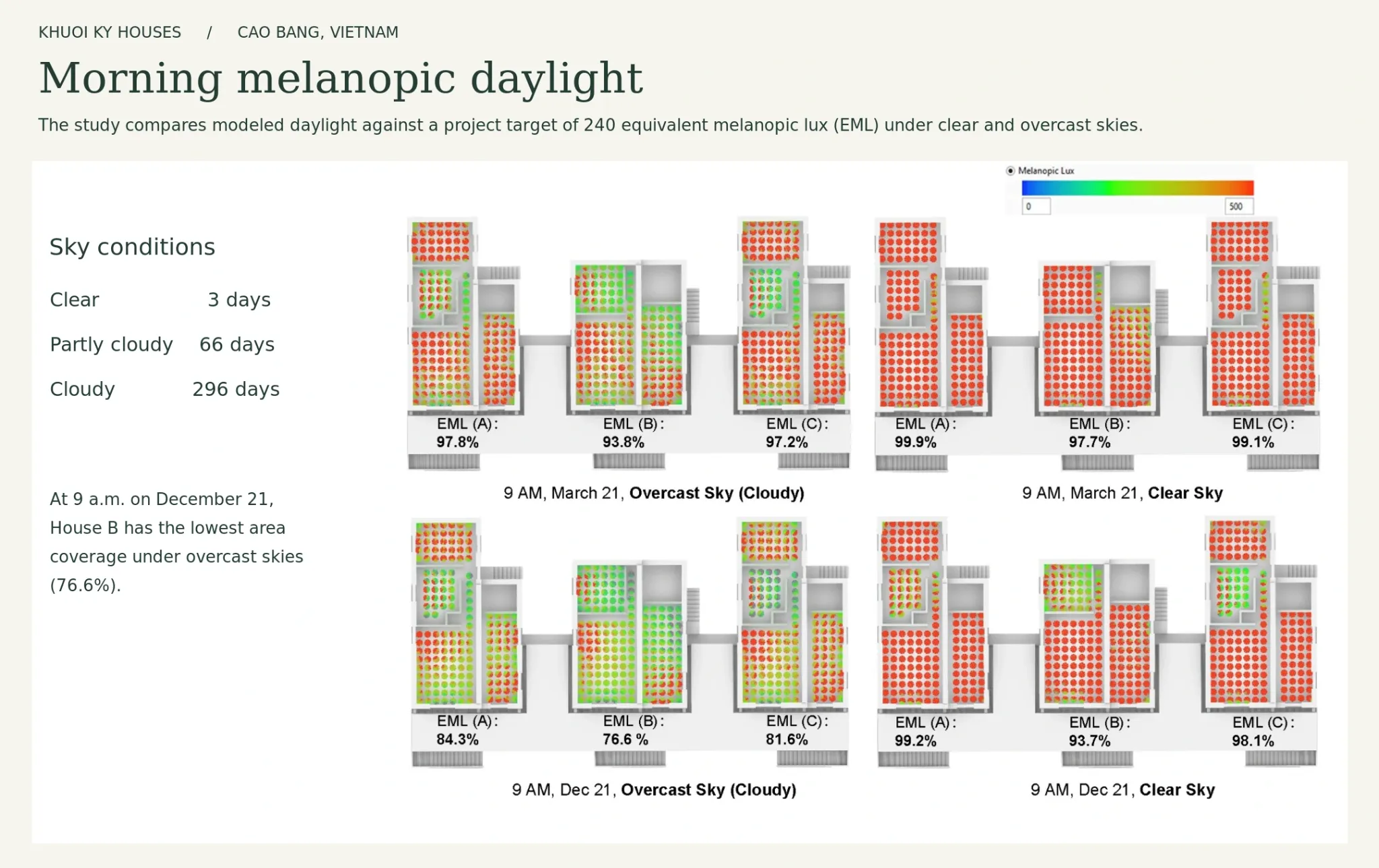
Morning simulations compare the area meeting the project target of 240 equivalent melanopic lux under clear and overcast skies in March and December.

I co-authored the PLEA 2024 paper on the Khuoi Ky Houses.

Explore the daylight and ventilation study