Fusing Environmental Technologies with Attached Housing in Rural Vietnam: A Synergistic Approach
Liliana O. Beltrán, Luming Xiao, Ghayda Alhabib, and Antonio A. Vazquez Molinary · PLEA 2024
Student design team lead · 2023 Solar Decathlon
Research Assistant · Fall 2023–Fall 2024
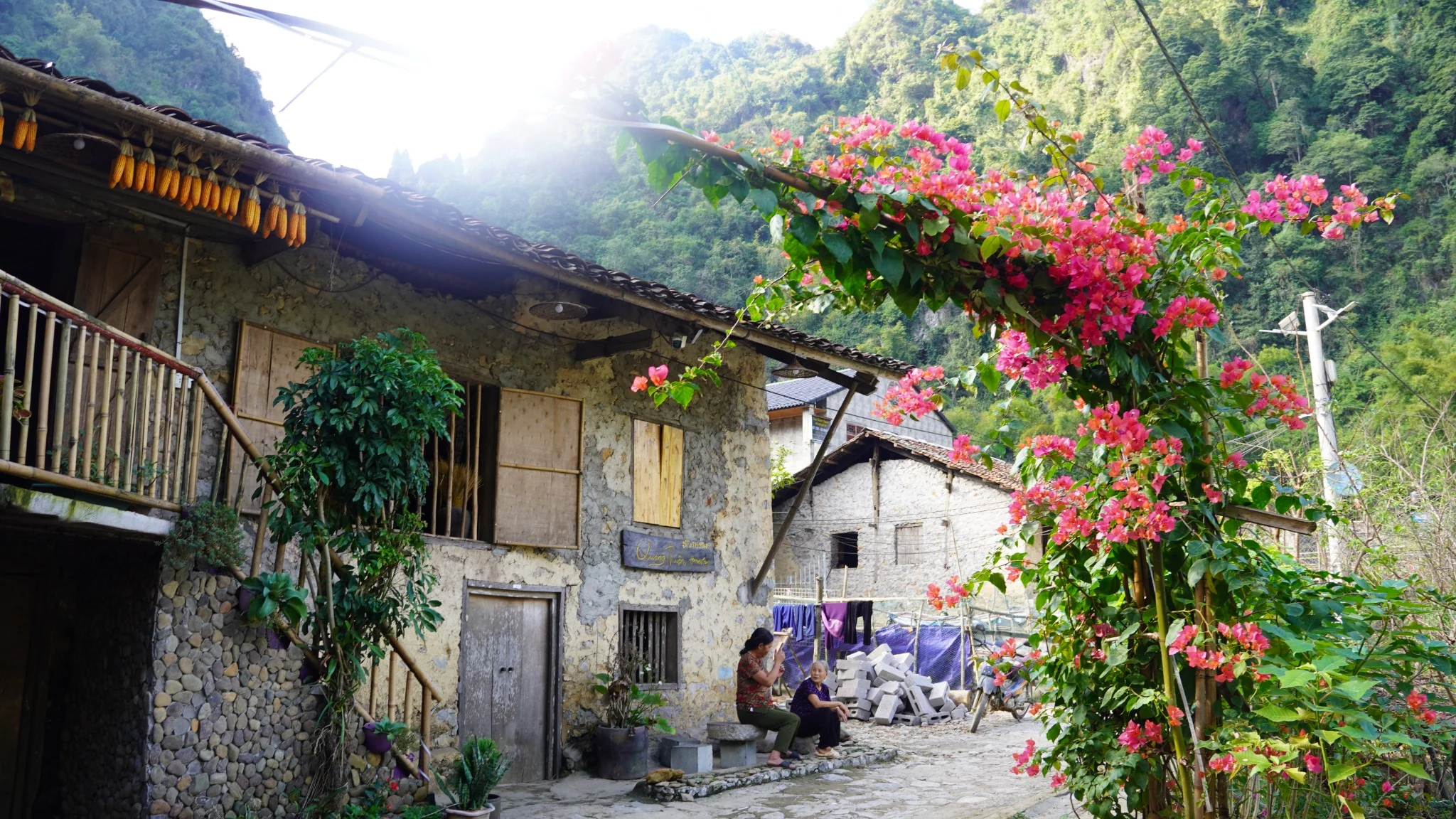
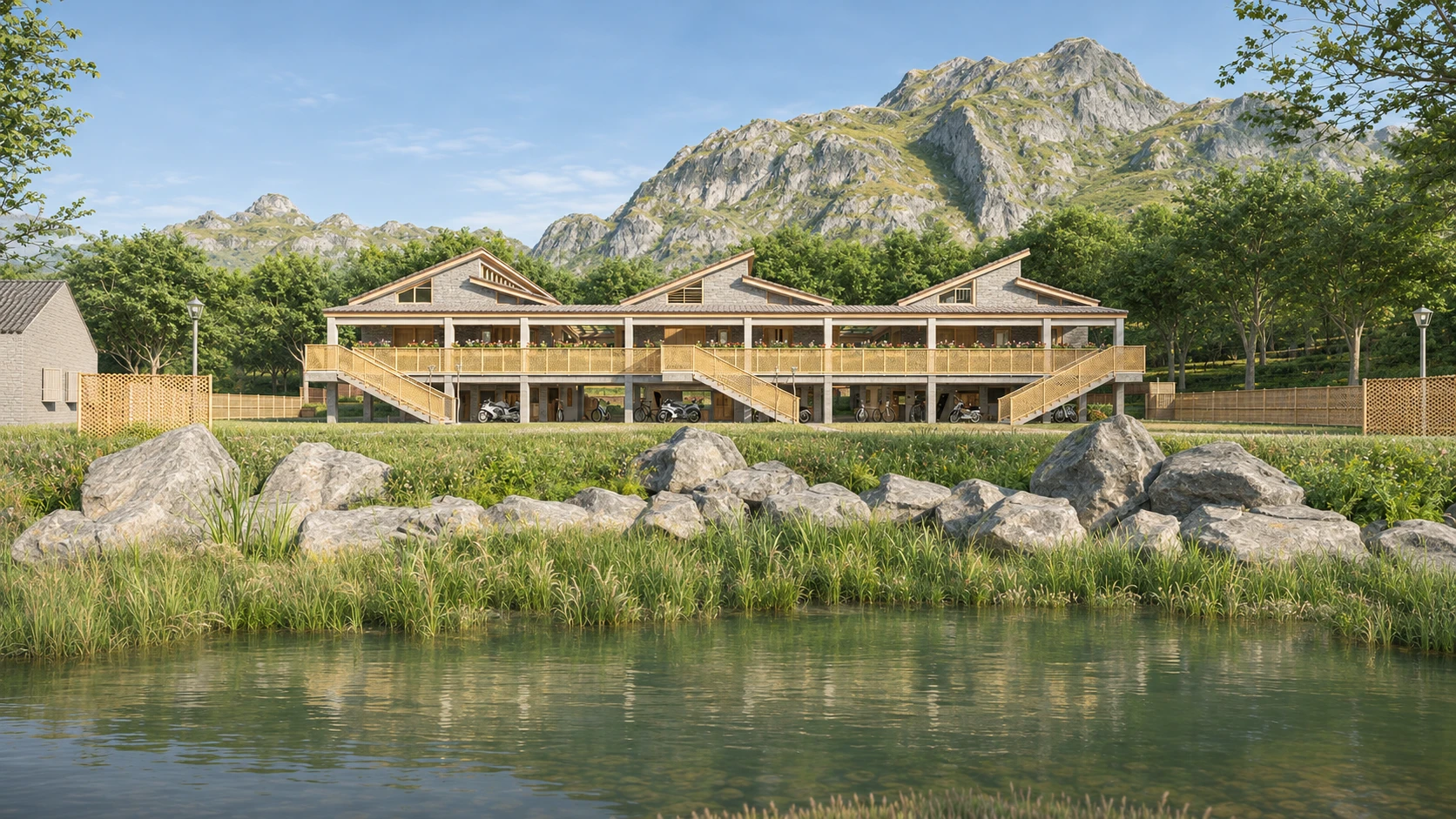
Could three attached homes in Khuoi Ky Village bring more daylight and fresh air indoors while preserving the shared outdoor spaces that Tày families use every day? A team from Texas A&M University and Hanoi University of Civil Engineering investigated this question as part of a net-zero housing proposal for Cao Bang, Vietnam.
From village measurements to a housing proposal
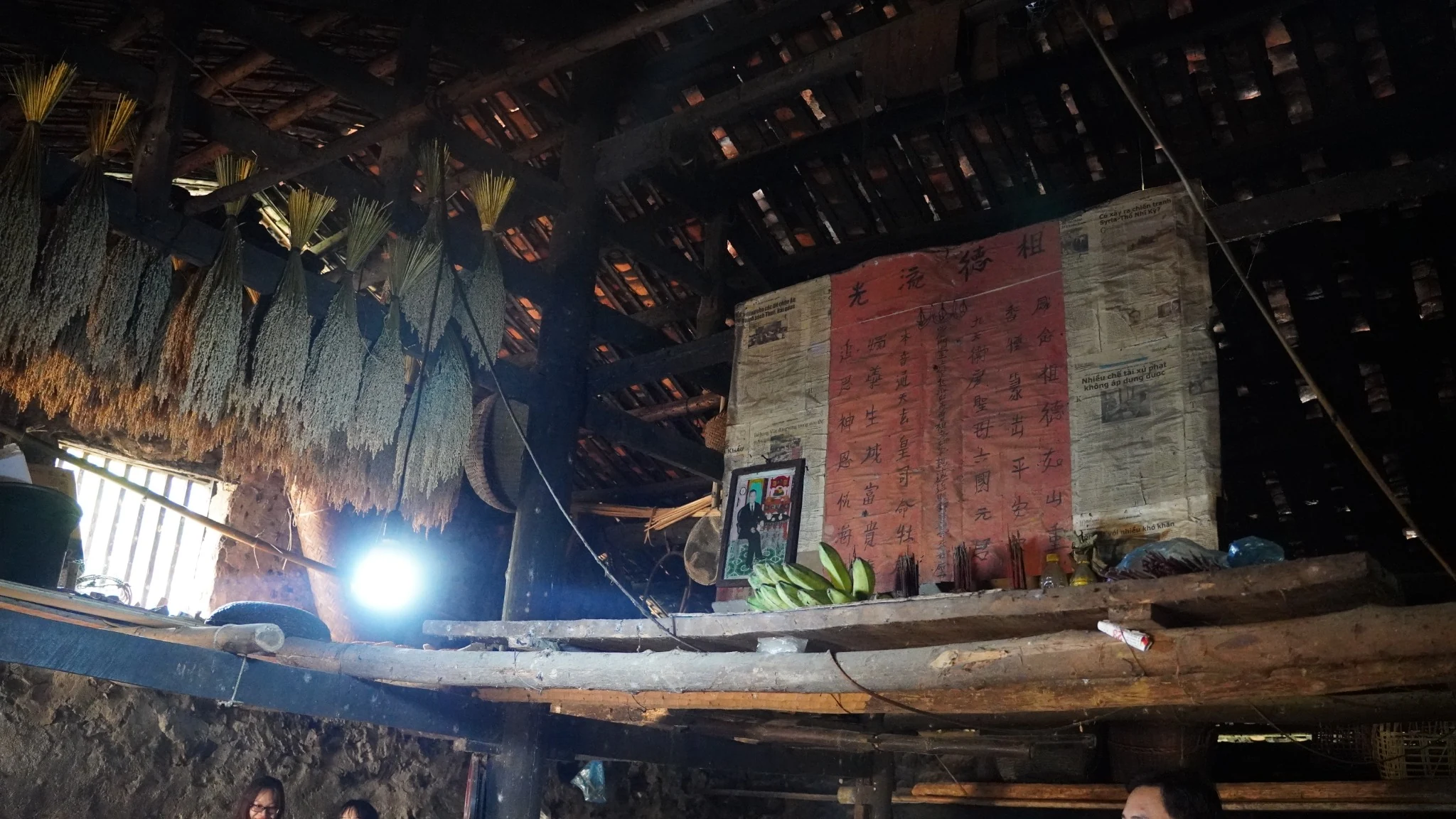
In November 2022, the team measured indoor light, air temperature, and air speed in existing village homes. The rooms surveyed were dim (127–136 lux) and poorly ventilated. Local weather data also classified 81% of days as cloudy. Together, these observations made access to diffuse daylight a priority.
The proposal linked three shallow homes with a shared veranda. Gaps between the homes allowed windows on opposite walls, and operable clerestory windows admitted light from above. We tested how daylight reached each floor plan over the year and how air moved through a living room with the windows fully open in summer.
What we found
- Daylight. Across the three homes, 92.8–99.5% of each home’s floor area received at least 300 lux of daylight for at least half of occupied hours in the annual simulation.
- Natural ventilation. With the windows fully open, House C’s living room averaged 25 air changes per hour in the June simulation. This suggests that open windows could supply fresh air for everyday ventilation under those conditions.
- Rooftop solar. We sized each home’s photovoltaic array to meet its projected annual electricity demand. The aim was to offset a full year of electricity use without oversizing the array.
Read the PLEA 2024 paper for details on the building systemsExplore the Khuoi Ky Houses design